| |||

|
We'll elaborate more on our problems with these traditional approaches as they come up, but here is an overview of why we're updating the following: | ||
|---|---|---|
|
Bohr model The assumptions used by the Bohr model predate quantum mechanics. | ||
|
Lewis structures Critical information is discarded when Lewis structures are generated; they also rely on the octet rule and can't rigorously be used for radicals. | ||
|
Octet rule There are many exceptions to the octet rule, including the many stable hypervalent and hypovalent molecules. | ||
|
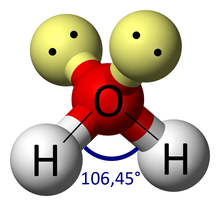
VSEPR model While electron pairs certainly repel each other, the tetrahedral arrangement of electron pairs upon which the VSEPR model is based is actually a very specialized case. In general, we will show that underlying atomic structure plays as much of a role as pair-pair repulsion in determining molecular structure. | ||
SOURCE | ||
|
Pauling hybridization Students often find Pauling hybridization to be quite arbitrary. We will show that the amazing diversity of bonding motifs in the chemistry of carbon occurs because carbon can undergo a lesser known form of bonding called recoupled pair bonding. The motifs associated with sp, sp2, and sp3 hybridization emerge very naturally as H atoms are added to C. | ||
